
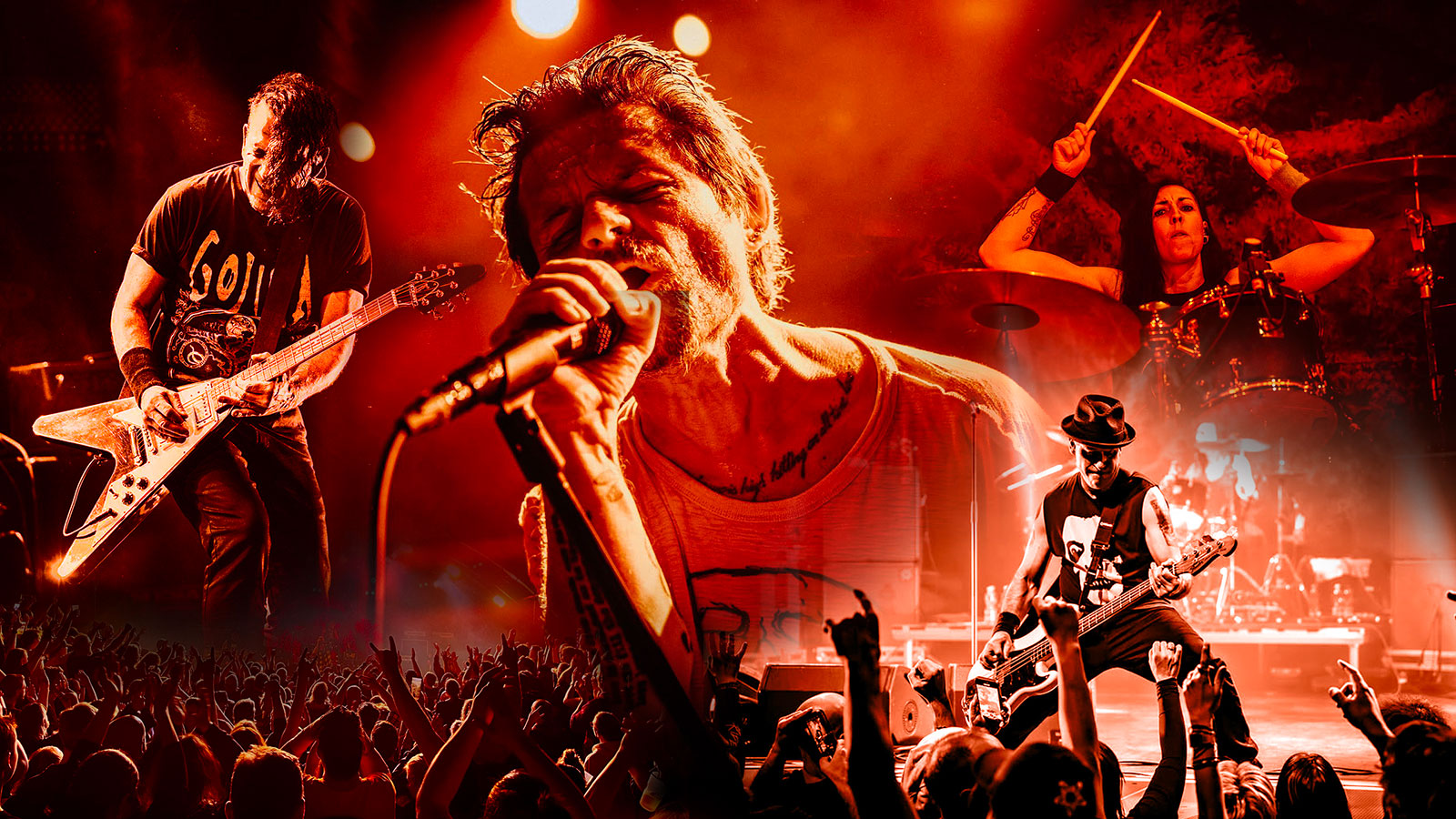
Brooklyn metal veterans Life of Agony are currently out on the road celebrating the 30th anniversary of their cult-classic sophomore LP, Ugly. And while it’s true that the record didn’t quite achieve the same success and instantly iconic reputation as their 1993 debut, River Runs Red, for many, the album has only become more fetching with time.
Released October 10th, 1995, Ugly found Life of Agony at a unique turning point — indeed, one of many throughout their decades-long career. After a steady couple of years on the road behind River, the band were feeling a bit burnt by the grind, and their personal relationships suffered as a result. The life pressures of being in his early 20s likewise hit bassist-lyricist Alan Robert hard — and he reflected on extreme feelings of alienation and depression throughout introspective songs like “Lost at 22.”
But then again, while a dark and heavy pallor shades a lot of Ugly, LOA weren’t afraid of prettying up the sound either. Take how vocalist Keith Caputo injected the sessions with more melody-forward performances and pop-adjacent hooks on self-penned pieces like “Let’s Pretend” and “How It Would Be.”
It all makes for the sound of a band navigating the complex ups and downs of life the best way they knew how — through their music. And over the years, countless fans have listened, finding solace in Life of Agony’s affectingly Ugly sound.
“We were addressing very personal mental health issues long before those topics were OK to talk about publicly,” Robert says. “I can’t tell you how many people have broken down in tears telling us that the Ugly album saved their lives because they saw themselves in those songs.”
Speaking with Revolver, Robert reveals the band dynamic through the Ugly days, reflects on both the “dark baggage” of the era and good times on the road with Ozzy Osbourne and Anthrax, and discusses how beautiful it’s been to present their sophomore release through front-to-back performances.
River Runs Red was a breakthrough for Life of Agony — it got you on MTV, it put you on the road nonstop with a bunch of sick bands. How much pressure were you feeling, in terms of following that up?
ALAN ROBERT Yeah, as a young band, we spent a few years creating that first set of songs through demo recordings and local shows, building a following on the East Coast. By the time we signed with Roadrunner in ’93, we’d had the chance to really develop our sound. After River Runs Red came out, we toured for two years straight, which taught us first-hand what songs hit hardest with the crowd. That experience shaped how we approached writing for Ugly. We wanted to grow beyond River, crafting memorable hooks over heavy riffs, even tuning lower on some tracks to push the sound heavier. Roadrunner gave us a bigger budget, so we worked with Steve Thompson and Michael Barbiero, who’d worked with Metallica and Guns N’ Roses, which at the time seemed like a great opportunity. Between the short writing window, a new production team, and the band dynamics at the time, all of that contributed to why the two records sound so different.
What was the general vibe within the band at this point, as you were coming off the road and heading into the studio?
It was tough. We definitely had internal troubles. River Runs Red was a huge success and kept us on the road for two years, which changed all our lives. What started as a fun side project outside of college suddenly became a full-time job, touring the world nonstop. That took a toll on relationships, and I remember juggling personal obligations with the band’s relentless schedule.
When we made River Runs Red, we had no idea how it would be received — we made that record for ourselves. By the time we started writing Ugly, things were different. Of course, we still wrote from the heart, but now we were conscious of how the songs would work live and how they’d stand as a follow-up. We had very little time, we were growing as musicians, and our influences were all over the map. We wanted more layers, bigger ideas, and to branch out — and you can hear that shift from record to record. Still, the honesty in the songwriting ties it all together.
On top of that, the mid-Nineties music industry was shifting fast. Commercial rock radio was exploding, and the label pushed us hard to make videos for Ugly. We thought the treatments were ridiculous — so much so that we’d toss them out the bus window. [Laughs] In the end, we didn’t make any videos, which in hindsight was probably a big mistake. But at the time, we had too much integrity to fit into some fake image that didn’t represent who we were.
There’s certainly a gloom to this record, but there’s also a different kind of optimistic melody to pieces like “Let’s Pretend” or the almost pop-rocking “How Would It Be?” How intentionally were you trying to push the boundaries of what Life of Agony could sound like?
Those songs were really Keith’s breakthrough as a songwriter. Up until then, he’d taken more of a backseat. I remember during the River Runs Red sessions he brought in an unfinished idea called “3 Companions.” It had a slow, Pink Floyd vibe, but [Type O Negative keyboardist] Josh Silver — who produced that record — didn’t feel it fit the album, so it never made the cut. By the time we got to Ugly, Keith came in with more ideas, and they were incredibly emotional and honest. Songs like “Let’s Pretend” and “How Would It Be?” gave us a chance to show another side of Life of Agony, and fans really connected with that vulnerability — “Let’s Pretend” especially became a favorite.
That openness was the headspace we were in: If something felt cool, we went with it. We loved dynamics. On Ugly, you hear those contrasts everywhere — in tracks like “Unstable” or the title song, you’ll find quiet, fragile moments right alongside ferocious ones. That balance of extremes was what we were striving for.
Ugly isn’t a concept album like River. As the primary lyricist on this record, though, what recurring motifs do you see in Ugly, and how do you reflect on those feelings 30 years later?
While Ugly isn’t a formal concept album, there are recurring themes throughout — alienation, loneliness, despair, and the idea of wearing a mask to fit into the world. The number 22 appears a lot — “Lost at 22,” “Ugly,” and “Damned If I Do” — because that was my age then and it shaped the record’s tone.
The lyrics were basically a diary. I was in a very dark place back then and I even thought about taking my own life. Those feelings poured into the songs, and listening to the album now is difficult because it brings me right back to that headspace. That’s also why the original album art concept looked like an old, leather-bound journal with Ugly scratched into the cover, and why my drawings of the boy in the mask became the visual center of the photo shoot.
Thirty years on, I’m in a very different place — I can see how those songs were necessary for me then. They captured a moment of truth, and while it’s still hard to revisit, I’m grateful that the music connected with people who felt the same things. I think that’s part of the reason the Ugly album has had this longevity: We were addressing very personal mental health issues long before those topics were OK to talk about publicly. I can’t tell you how many people have broken down in tears telling us that the Ugly album saved their lives because they saw themselves in those songs.
Some of these songs have been staples of LOA shows for years, like “Lost at 22.” Some like “Fears,” “Drained” or your Simple Minds cover have seemingly never been played live. Why didn’t any of those make it to the stage back then? How’s it been relearning them for this anniversary tour?
Back then, River Runs Red was such a hit with audiences that we leaned heavily on those songs — they were well known and got the best reactions. We were often opening for bigger bands like Ozzy and Korn, so our sets were short, and we didn’t have much room to experiment. Little by little, we sprinkled in Ugly tracks. “Other Side of the River” and “Lost at 22” always connected, so they stuck in the set. Other songs would rotate in and out depending on how they worked live. A track like “Don’t You (Forget About Me)” needed keyboards, and by that point Keith wasn’t playing them onstage anymore, so we never attempted it.
Relearning these songs for the “30 Years of Ugly” tour has been a blast. With three decades of perspective, I can finally hear them from a new angle and appreciate what we were trying to do back then. I can leave the dark baggage out of it now, which makes playing them feel fresh. The challenge has been fun — over the past couple of years we’ve even pushed ourselves with full acoustic sets. It’s been a great way to keep things interesting for us and, I think, for the fans, too.
Not too long after the album comes out, you went on the road with Anthrax and Deftones, and soon after started hitting arenas with Ozzy and Korn. What do you remember about any of those trips from that cycle, whether on or offstage?
I’ll never forget when we were backstage on tour in Europe and got the call that we’d be joining Ozzy and Korn for a U.S. arena run. We were ecstatic. It was such a huge opportunity for us, and getting to meet and hang with Ozzy, Sharon and the rest of the family was unforgettable. Those shows felt like a massive step up in America, and I think that tour directly led to us landing Ozzfest ’98 later on — another incredible milestone.
On that ’95 run, Geezer Butler was playing bass for Ozzy, and sometimes his side band GZR would open for us in between Ozzy dates, since Ozzy wasn’t performing every night. On a handful of shows, Geezer actually played through my bass rig — which blew my mind. I remember thinking, Is this really happening? As a lifelong Sabbath fan, it felt like he left some of that magical Sabbath energy in my amp, and I carried that with me ever since.
The Anthrax tour with Deftones was also really cool, because we already knew the Anthrax guys well from the New York scene. We did a few Anthrax runs over the years — even with Misfits and Cannibal Corpse. Deftones were brand new at that time, out on their first album, and it’s been amazing to see how successful they’ve become. My teenage daughter actually loves them, so I even bought her tickets to see them when they came through town earlier this year. I haven’t hung out with them in ages, but back then we had a blast — I remember going bowling with them on off days and especially bonding with Chi, their original bassist. May he rest in peace. He was always super down-to-earth and chill — a real sweetheart of a guy.
The band have called Ugly the “ugly duckling” of the Life of Agony catalog. If the record had been a touch under-loved when it first dropped, what’s its legacy now?
It’s funny because over time Ugly has really become a classic with fans, even though some diehard River Runs Red people didn’t embrace it at first. For others, Ugly was their introduction to Life of Agony, so they had no preconceptions and just connected with it as it was. Many of those fans later went back to discover River Runs Red. In some ways, River Runs Red was too heavy for them, while Ugly offered something they could latch onto more easily. It really depended on which record people heard first.
There are bands who pride themselves on making the same album over and over, but we were never that band. We always wanted to push ourselves, try different things, and grow as musicians. Ugly was simply who we were at that moment in time — for better or worse. We were this dysfunctional family trying to hold it all together while chasing our dreams and navigating the pressures of being a full-time band in the ’90s. And now, three decades later, it’s incredibly exciting to bring Ugly back to life onstage in its entirety for the very first time.
Playing the whole album front to back feels like the perfect way to honor where we were then and share that raw, unfiltered moment with the fans who have carried it with them all these years.
Life of Agony “30 Years of Ugly” tour dates:
9/23 Pittsburgh, PA – Jergels ^
9/24 Columbus, OH – The King of Clubs ^
9/26 Cleveland, OH – The Winchester ^
9/27 Flint, MI – The Machine Shop ^
9/28 Joliet, IL – The Forge ^
9/30 Leesburg, VA – Tally Ho Theater ^
10/1 Reading, PA – Reverb ^
10/3 Worcester, MA – Palladium ^
10/4 Hampton Beach, NH – Wally’s ^
10/5 Patchogue, NY – Stereo Garden ^
11/4 Dornbirn, AT – Conrad Sohm !
11/7 Munich, DE – Backstage Werk !
11/8 Pilsen, CZ – KD Serikova !
11/9 Katowice, PL – P23
11/11 Berlin, DE – Columbia Club !
11/12 Hannover, DE – Capitol !
11/14 Saarbrucken, DE – The Garage !
11/15 Eindhoven, NL – Helldorado Festival !
11/16 Antwerp, BE – Trix !
11/18 Utrecht, NL – Tivoli Rotunda !
11/19 Bochum, DE – Zeche !
11/20 Drachten, NL – Iduna !
*with God Forbid
^ with Jasta
! with Ugly Kid Joe