
People around the globe were constantly doing the “Macarena” back in 1996. Yet while the year’s biggest dance-music hit was damn near omnipresent whilst booming out of car stereos, wedding receptions and tinny supermarket speakers, the heavy-music world was making serious moves, too.
We got a load of the most famous metal band taking themselves into an artier direction, Ozzy launched Ozzfest as a two-day event before the festival hit the road in later years, and a Brazilian thrash idol got his groove on with his bandmates one last time before uprooting himself from their lineup.
Tickle Me Elmo dominated kids’ Christmas wishlists that year, but these are the heavy classics that continue to tickle us to this day.
Acid Bath – Paegan Terrorism Tactics
Cult Louisiana sludgesters Acid Bath put us in a strange daze with the blistering waves of distortion, planes-crossing poetics and undulated grooves they brought to their sophomore LP, Paegan Terrorism Tactics. And, indeed, the record contains some of the band’s most memorable psychedelic epics — like “Bleed Me an Ocean,” a Sabbathian cemetery crawl that pits vocalist Dax Riggs’ doomy, yet Southern-charmed croon against guitarist Sammy “Pitre” Duet’s goblin-esque wails.
From the galloping crust of “New Corpse” to the lysergic waltz of “Graveflower” — we’ve danced to these electric paegan love song for years, and we’re never going to stop.
Alice in Chains – Unplugged
Alice in Chains had turned down the opportunity to do an Unplugged performance for MTV multiple times before staging this stately, haunting and staggeringly exquisite set in 1996. It’d also been close to two years since they’d played a show. The delay was the right move, though, because this one’s perfect.
While they obviously brought out semi-acoustic highlights from their Sap and Jar of Flies EPs, opening it all up with the latter’s shimmering “Nutshell,” the show also recast grungy faves likes “Rooster,” “Angry Chair,” “Would?” and “Sludge Factory” in a more vulnerable — albeit gloom-coated — light. There’s also a light-hearted unplugged rip on “Enter Sandman” on here.
Though they’d open a series of shows for KISS later that summer, Unplugged is also notable for being Alice in Chains’ last headlining performance with Layne Staley on the mic.
Converge – Petitioning the Empty Sky
We tend to reflect on 2001’s Jane Doe as being Converge’s big breakthrough and as one of hardcore’s most impressive and revolutionary moments — and in many ways, it certainly is. But you could easily argue that guitarist Kurt Ballou’s opening panic chords on “The Saddest Day” — each dissonant hit jarring into your essence like as psionic blade — marks the moment Converge became eternal. It’s a crushing and crucially important part of the band’s history — after all, they just named their new music festival after the iconic track.
Feverishly splattering Slayer-isms with Nineties-style mosh grooves, exposed-nerve emotionality, pterodactyl screams, uncomfortably weird post-emo mewling, and perfectly imperfect performances (check the frantic, fall-apart hammer-ons in “Shingles”), Petitioning the Empty Sky was originally released as a four-song 7-inch before being re-upped with live cuts and comp tracks.
Failure – Fantastic Planet
Cult space rockers Failure terraformed Lita Ford’s old house in Tujunga, California, to write and record parts of their magnum opus, Fantastic Planet. Make no mistake, the results still sound out of this world.
The album title takes inspiration from the surreal French sci-fi animated film of the same name, while the heart-heavy, drug-blurred storyscapes found in songs like “Dirty Blue Balloons” and “Sergeant Politeness” reflect the all-too-real heroin addiction that had taken a grip of vocalist-guitarist Greg Edwards through the Nineties.
Filled with catalog favorites like “The Nurse Who Loved Me” — later covered by A Perfect Circle — Fantastic Planet’s sometimes sad, always breathtaking presentation of post-grunge grandeur and hypnotic-and-heavy shoegaze has only grown sweeter with time.
Korn – Life Is Peachy
Few were ready for the game-changing flow of Korn’s self-titled LP when it dropped in 1994, but many got on-board for everything the Bakersfield, California, quintet had to offer forevermore.
Korn kept converting the masses with their stellar sophomore LP, Life Is Peachy. The band once again worked with producer Ross Robinson, and likewise once again delivered a raw-as-fuck outing of subversively swerved seven-string riffs, gum-soled nu-metal bounces, and a manic, emotions-soaked performance from frontman Jonathan Davis — whether screaming, terror-scatting or scratchily crooning the horny lil’ hook in big hit “A.D.I.D.A.S.”
While full of heavy Korn originals, another standout was the band’s funky remodel of rapper Ice Cube’s “Wicked” single, which found Davis trading bars with Deftones’ Chino Moreno.
Marilyn Manson – Antichrist Superstar
Manson built up a following between 1994 debut album Portrait of an American Family and 1995 EP Smells Like Children. With 1996’s Antichrist Superstar, he started a movement.
Produced under drug-heavy circumstances and violent recording sessions with producer Trent Reznor and Skinny Puppy’s Dave “Rave” Ogilvie, the concept album explored fascism, political uprisings and devotion through creepily swung-and-industrialized anthems (“The Beautiful People”) and middle finger-waggling treatises (“Irresponsible Hate Anthem”). Ultimately, Antichrist Superstar induced fervent, obsessive mania in music fans, while simultaneously stirring fear in the hearts of politicians and church groups — who picketed packed concerts and discussed Manson as the most dangerous pop artist of his day.
It’s hard to overstate how hard Manson cratered into the collective consciousness at the time. For many, he became the “man that you fear.” For countless others, he was a superstar.
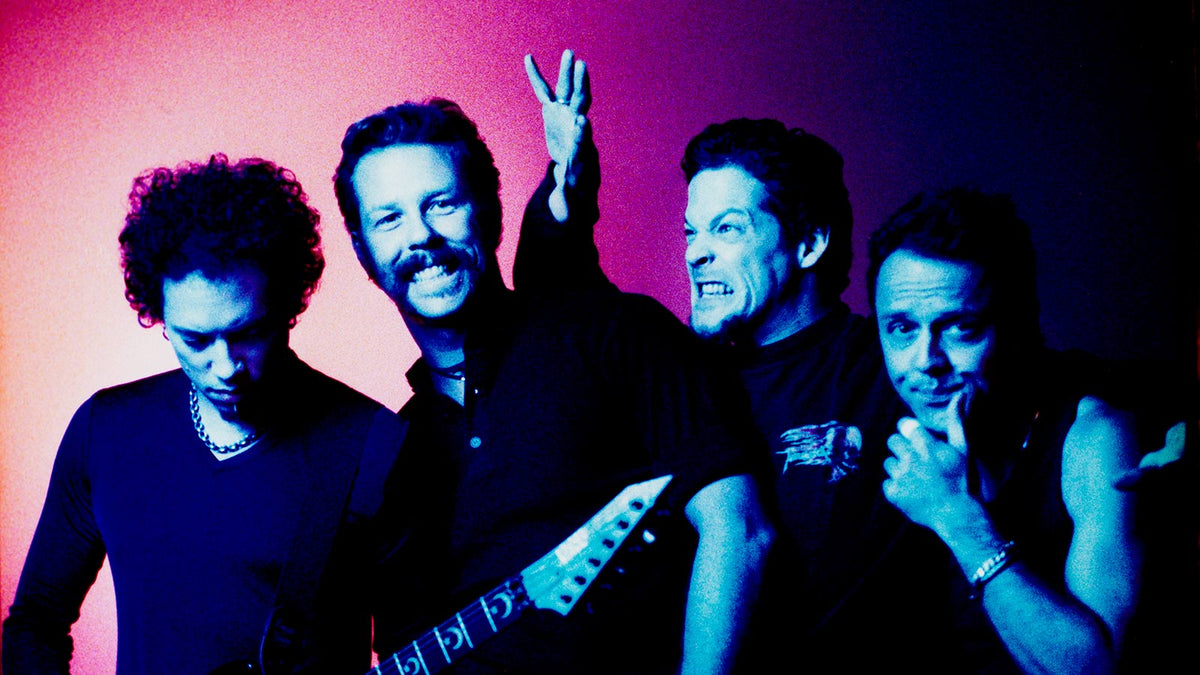
Metallica – Load
For better or for worse, Metallica caught a lot of shit in 1996 while promoting Load. And, honestly, a lot of that came down to the fact that they cut their hair more than it did the actual music.
On record, the group’s sixth studio full-length was a natural progression from the juggernaut dominance of “The Black Album.” Sure, Kirk Hammett brought bluesy slidework to “Ain’t My Bitch,” but James Hetfield’s precision-impact riffery on the rest of the beastly opener proved he was still master of a mostly-metal domain. “King Nothing” stands as one of their most stomping, stadium-sized anthems, and you had to give it to the band for broadening out the melody with “Until it Sleeps.”
It wasn’t exactly loaded with left turns, but it remains a unique entry in the overall tale of ‘Tallica.
Neurosis – Through Silver in Blood
Steve Von Till once described the making of Neurosis’ epically psych-sludging 1996 breakthrough as “a fucking railroad through hell”. Addiction, homelessness and personal issues made it a trying, heavy time for the members of the band. While it’s a comparatively smoother journey for listeners, it still hits you like a ton of bricks.
Its 12-minute opening title cut alone is a dread-building masterpiece of tribal tom pounding, concentric factory noise and some of the bleakest, most inescapably crushing riffs of Neurosis’ entire catalog. An apocalyptic windstorm of tower-toppling grooves and dour, conscious-expanding noise experiments blow you over for the post-metal classic’s remaining hour of intensity.
Pantera – The Great Southern Trendkill
Made in the wake of a Billboard-topping landmark — 1994’s Far Beyond Driven — and following some of the biggest shows of Pantera’s career to that point, the Texas groove kings could have taken a mass-appeal approach with The Great Southern Trendkill to in-road themselves even further into the mainstream.
Fortunately, they did the opposite — if anything, the 1996 release made them sound more dangerously unhinged than ever before. While the band had certainly transcended the underground of America by this point, pound for pound the record is one of the nastiest major-label releases of the era.
Pantera strike like a rattler on the attack through recklessly noisy thrashers like “Suicide Note, Pt. 2.” They mercilessly dragged listeners through deep undulating grooves. Even at its prettiest, Dimebag Darrell still slays through his legendarily squealy “Floods” solo. Simply put, the record still kills.
Rage Against the Machine – Evil Empire
After stunning the masses with the political rap-rock fury of their 1992 self-titled debut, Rage Against the Machine continued to parade themselves through the ruling class’s veritable china shop with their equally acerbic, astute and infectiously menacing Evil Empire.
Across all-timers like “Bulls on Parade” and “People of the Sun,” Tom Morello’s percussive riffs detonated upon impact. Zack de la Rocha’s raps became more pointed and powerful, while the liner notes helped spread the word of various activists.
Did it ultimately end up putting Huey P. Newton and Che Guevera on people’s pull lists? Perhaps not as much as the band would have hoped, but Evil Empire certainly gave their fans plenty of food for thought.
Sepultura – Roots
Sepultura supplanted the thrashiest element of their sound on Roots to focus on knotty, head-wrecking grooves.
Though there’d been a steady progression towards those kinds of violent, earth-quaking drum patterns over the years, they went all-in with the mosh-forward approach on their sixth album, producing intense body movers like “Roots Bloody Roots,” “Ratamahatta” and “Attitude.” What’s more, they also took a unique route by merging Nineties groove-metal heft with beats, instrumentation and Xavante chanting reflective of their Brazilian surroundings. Extra points for enlisting the unholy duo of Korn’s Jonathan Davis and Faith No More’s Mike Patton as guests vocalists (on “Lookaway”).
It’d be their last album with founding frontman Max Cavalera, who later evolved Roots’ rumbling sound with his next project, Soulfly.
Slayer – Undisputed Attitude
As the most viscerally violent-sounding band of the Big 4, Slayer’s catalog is already pretty hardcore. Nevertheless, the L.A. outfit’s punk covers set from 1996 was a perfect, pissed-off addition to the discography.
The group deliver rage-ripping takes on old songs from Verbal Abuse and D.R.I.. They execute D.I.’s “Richard Hung Himself” with gallows humor, while a controversial, sarcastic lyric swap on Minor Threat’s “Guilty of Being White” left that band’s Ian MacKaye profoundly unamused.
Slayer also re-upped a furious pair of cuts from Jeff Hanneman’s punkier Pap Smear side-project, though slow-rolling Slayer original “Gemini” closes things out with a sleek, metallic edge.
Soundgarden – Down on the Upside
The downside of Soundgarden’s fifth full-length is that it would be the band’s last album before a 13-year sabbatical. The upside is that they left their faithful fan base with a powerfully psychedelic pseudo-finale full of hooks and that patented Soundgarden weirdness.
They flirted with acid flashback sludge-pop (“Pretty Noose”), Hendrixian grunge-bluesiness (“Burden in My Hand”), strange-metered prog heaviness (“Never the Machine Forever”) and tight-coiled, teeth-bearing proto-punk explosions (“Never Named”). Chris Cornell’s air-raid-siren croon is in peak form, while Kim Thayil’s wah-obliterated leads reigned supreme.
The self-produced album led to a spot on the 1996 edition of Lollapalooza and a Grammy Nomination. While inarguably overshadowed by Badmotorfinger and Superunknown, there’s still plenty to get down with on Upside.
TOOL – Ænima
Revolver readers once ranked Lateralus as TOOL’s greatest full-length statement, but make no mistake, 1996’s Ænima is likewise the good shit. Or, at the very least, its album title — a punful portmanteau of “Anima” (Latin for “soul”) and “enema” — keeps things playfully scatological.
Ænima begins with the purple incandescent alt-metal pound of “Stinkfist,” but tunnels through expressive layers of quixotic prog, black-storm-cloud melodicism and psychedelic heaviness.
While grooving, back-masked mid-album noise experiment “Die Eier von Satan” translates out of German as “The Eggs of Satan,” the one thing Ænima truly wreaks of is inspiration.
Type O Negative – October Rust
Type O Negative curiously begin October Rust with a throwaway joke track (the all-buzz “Bad Ground”) and follow it up with a spoken-word intro of the Drab Four thanking you for buying the album. After punking us out, though, the group lean into a mesmerizingly romantic goth-metal must-hear.
The record swells with devotional anthems (“Love You to Death”) and lustful classics (“Wolf Moon”) that prove, if nothing else, that vocalist-bassist Peter Steele was one of metal’s most cunning linguists.
The album also features a staggeringly sludgified take on Neil Young’s “Cinnamon Girl.” Just like the Crazy Horse leader’s iconic catalog, Type O’s October is fit for any season. Or, to put it another way, Rust never sleeps.