
This article originally appeared in a 2010 issue of Revolver Magazine.
“A lot of people remember my photos but forget that I took them,” Edward Colver says between drags of a cigarette on his back porch in Los Angeles. “It’s kind of a pisser.”
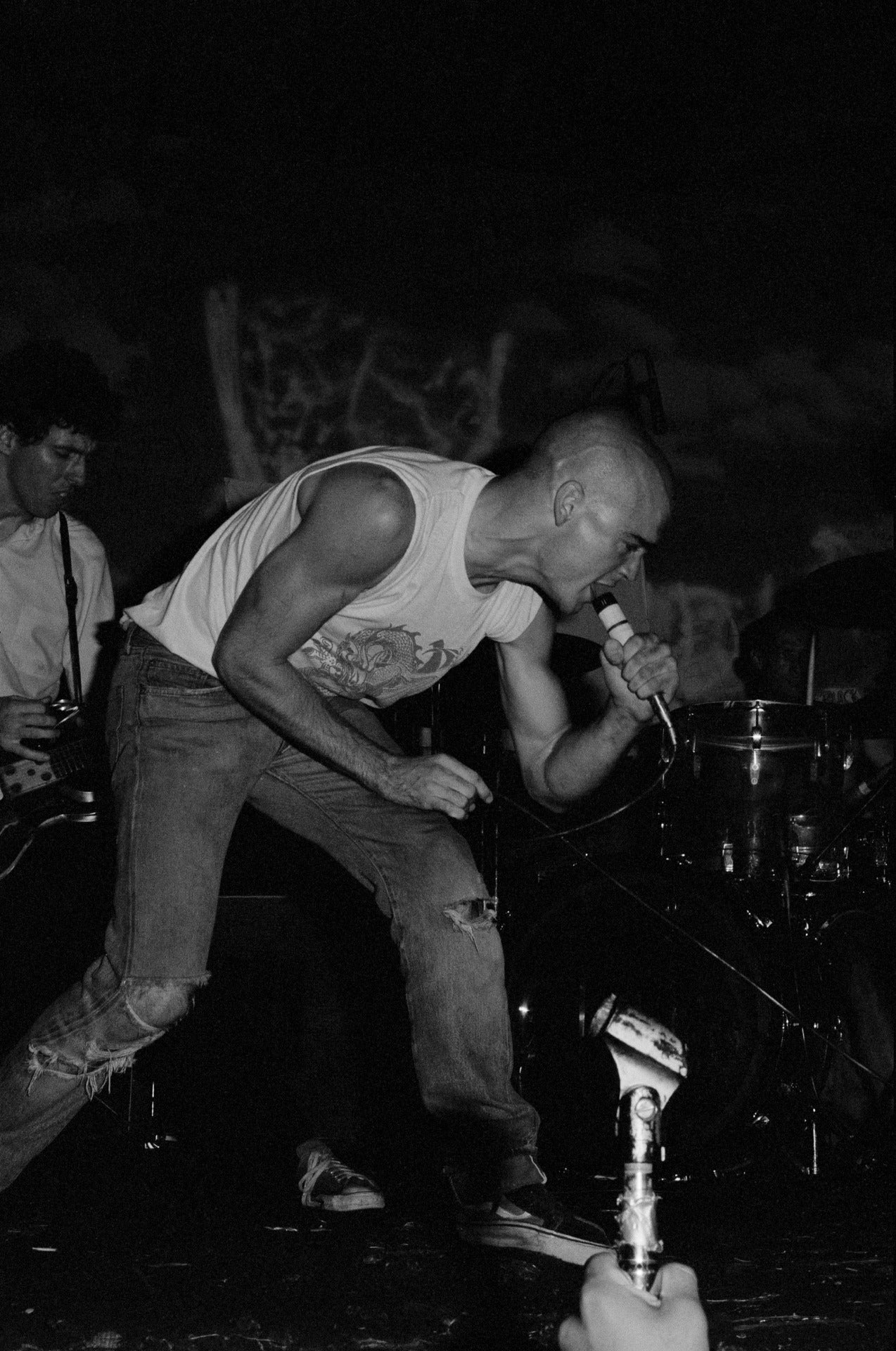
The fact is, if you’ve ever seen a photo of any band from California’s punk explosion of the late ’70s and early ’80s—Black Flag, Dead Kennedys, Circle Jerks, the Germs, the Minutemen, TSOL, the Gun Club—chances are good that it’s Colver’s. His gritty black-and-white images—almost all of which were shot on a busted 35mm camera through a 50mm lens, forcing him to get into his subjects’ faces—are so synonymous with that era that a 1983 punk single released by Pomona-based Toxic Shock Records bore the quip, “Surprise—no photos by Ed Colver.” “I did so many covers back then, it was ridiculous,” he recalls. “Between ’79 and ’83, I think I did 80 record jackets and singles.”

The album that put Colver on the punk-rock map was the Circle Jerks’ 1980 debut, Group Sex, but the most famous is unquestionably Black Flag’s 1981 classic, Damaged. Having enlisted former State of Alert barker Henry Rollins after a long string of vocalists (including Flag co-founder Keith Morris, who would later form Circle Jerks), the other members of Flag—guitarist Greg Ginn, bassist Chuck Dukowski, guitarist Dez Cadena, and drummer Robo—decided to put their new frontman on the cover of their full-length debut. The resulting image of Rollins punching a mirror is among the most iconic in the L.A. punk canon. “I forget whose idea the mirror was—maybe Greg’s,” Colver says. “We did it at a house in Hollywood. I put masking tape all over the back of the mirror and smacked it with a hammer. The blood I made out of red India ink, dishwashing soap, and instant coffee. I made up the recipe on the spot, and it worked perfectly. It looked way better than stage blood. It was a trip.”
Using his famous camera, Colver shot a few rolls using an on-camera flash. “I like the way the lighting looks—his arm is so close that it doesn’t catch a lot of the flash,” Colver enthuses. “I see all these guys now with their paparazzi flashes that recycle in a second. I had a little on-camera piece of shit. I had a piece of tape that went from one side of my camera, up over the flash, and down onto the other side. When I would shoot live, I’d change film in the motherfucking pit and keep the tape intact.”
Last year Colver compiled vintage images for a new photography book, Blight at the End of the Funnel, including a never-before-seen outtake from the Damaged shoot. “All the shots from indoors are lost, which is annoying. But I did some where Henry’s eyes are glowing red from the flash and it looked amazing. I wanted them to use one of those, but they thought it was too demented. I was like, ‘Shit, it’s called Damaged—what do you want?'”
To Colver’s dismay, the album was once mistakenly reissued with famous Slayer/Beastie Boys photographer Glen E. Friedman’s name in the credits. “That pissed me off bad,” Colver says with a laugh. “But it’s still one of my favorites. It’s cool that my name is the last thing you read in the credits, right at the bottom.”
Meanwhile, the victim of Rollins’ faux-violence has taken on a life of its own.
“About six years ago, I heard the mirror was for sale in a record-collector magazine called Goldmine for 4,000 bucks,” Colver says. “It’s easily identifiable—you can’t break a mirror the same way twice.”
For more information on Edward Colver and his photography book, Blight at the End of the Funnel, check out www.edwardcolver.com